
Article: Undyed merino wool socks: the purest choice for your skin and the environment
Undyed merino wool socks: the purest choice for your skin and the environment
What are undyed socks?
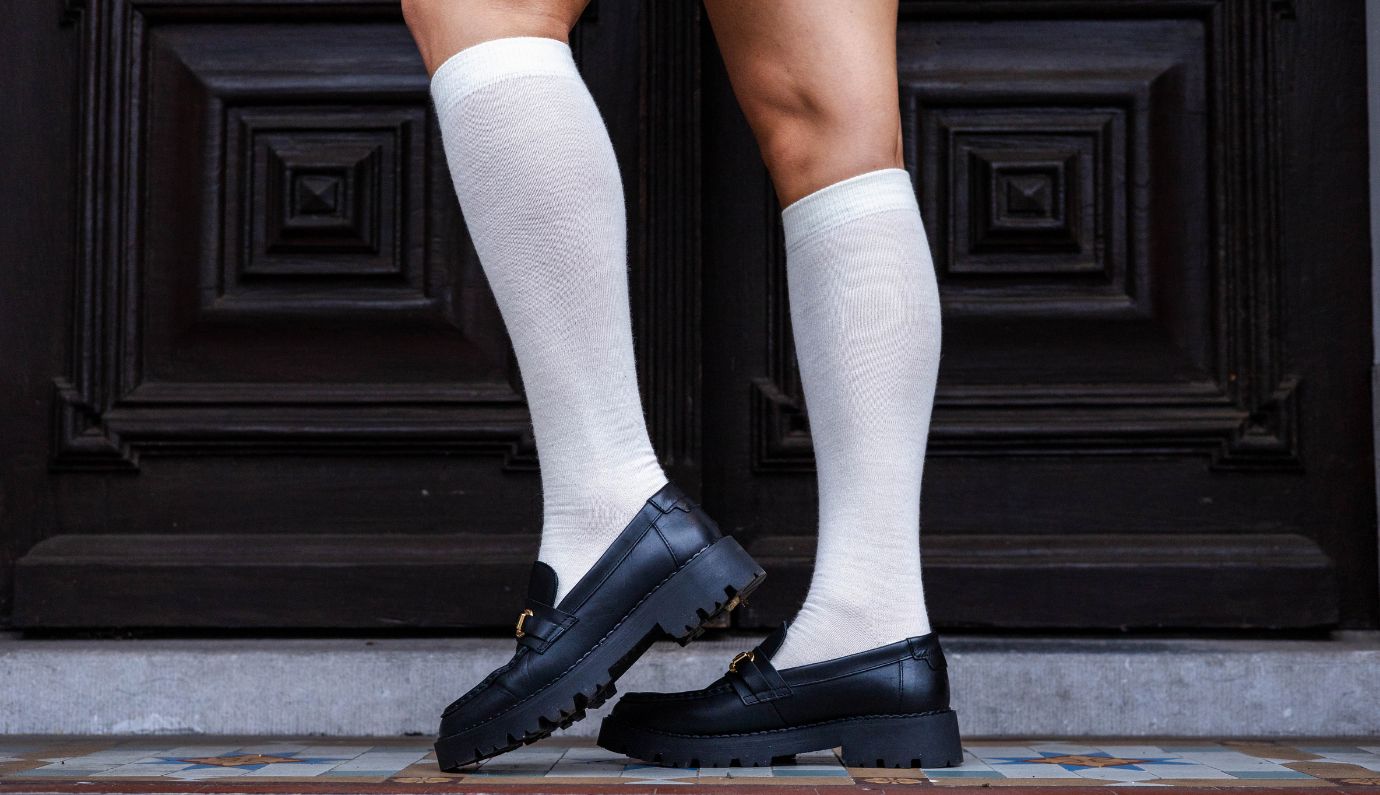
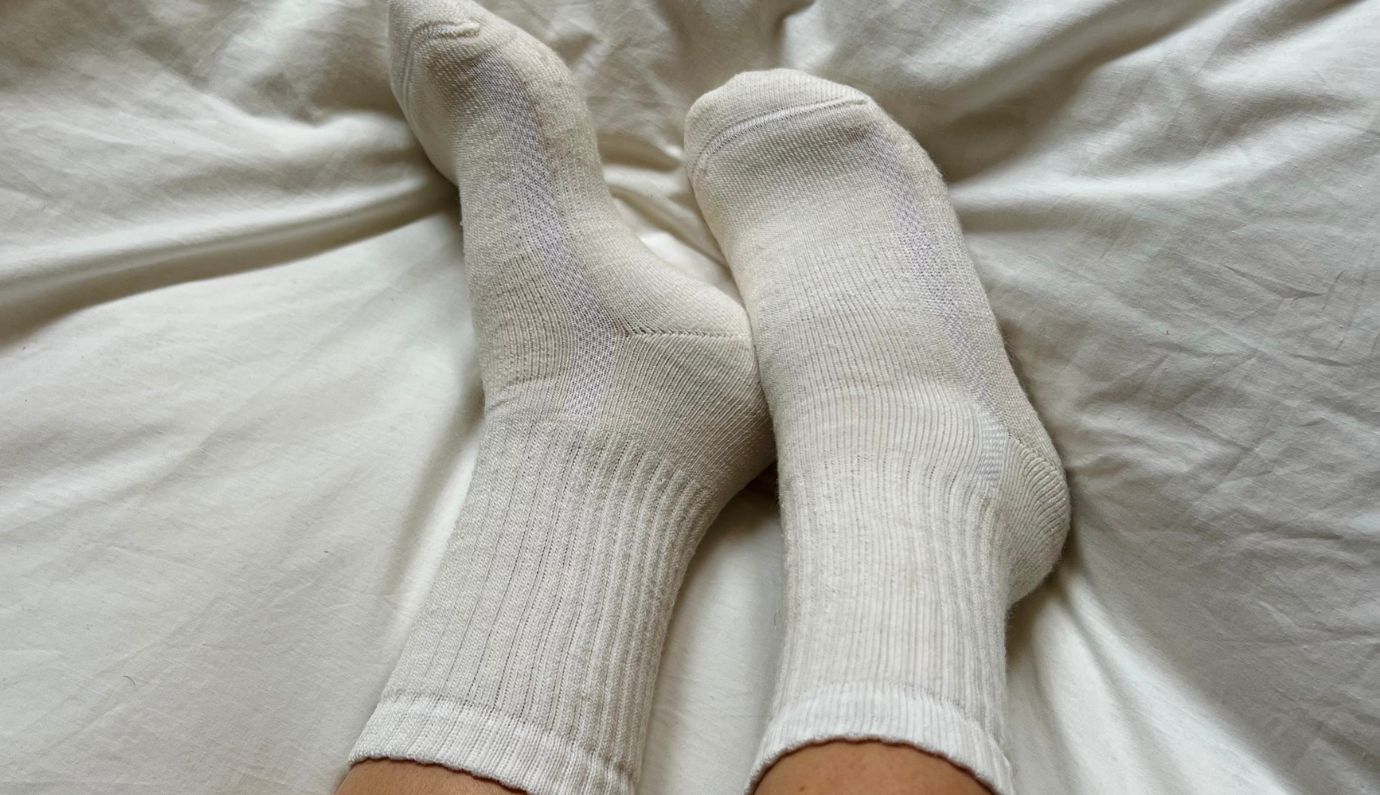
Undyed socks are socks made from untreated natural fibres that have kept their original colour. With merino wool this means the wool goes straight from shearing, washing and spinning into yarn, without any synthetic dyes, bleaches or chemical fixing agents being involved.
The colour of merino wool is naturally a warm, off-white shade that varies slightly depending on the breed of sheep and the region the animal lives in. Some sheep also produce wool in light beige, sand or even a soft grey tone. These are the colours you see in our merino wool sock collection.
So this is not only about what is not in these socks. It is about a deliberate choice to put the fibre under as little strain as possible, so that all of its natural properties are fully preserved.

The benefits of untreated merino wool for your skin
Your skin is the largest organ in your body and is in contact with the fabric of your socks every day. That makes choosing the right material more important than many people think.
No artificial dyes against your skin
Conventionally coloured socks use chemical dyes to achieve the desired colour. That process requires fixing agents, mordants and sometimes plasticisers too, substances that remain in the fibre. On sensitive or atopic skin these residues can cause irritation, redness or itching.
If you choose socks without dye, only the purely natural fibres come into contact with your skin. There are no chemicals in them that can irritate it. That makes our merino wool socks particularly suitable for people with sensitive skin, eczema or skin allergies.
Softer than you ever thought possible
Merino wool has fibres between 15 and 24 microns in diameter, considerably finer than ordinary sheep’s wool. That is why merino wool does not itch. And when the wool is left untreated, all of the fine scales on the fibre structure stay intact. The result is a yarn that is supple, feels elastic and sits extremely comfortably.
Untreated merino wool also keeps its natural wool grease, lanolin. Lanolin has naturally softening and nourishing properties for the skin and plays a part in the self-cleaning action of the fibre.
Temperature regulation that works naturally
Merino wool is a thermodynamic material. The complex scale structure of the fibre traps heat or cold in tiny air pockets. This keeps your feet warm in winter and cool in summer, without you having to change socks.
With untreated merino wool this structure remains completely intact. Chemical treatments such as superwash processes actually damage the fibre structure. In our natural merino wool socks we deliberately leave that treatment out, so you get the full benefit of what merino wool does naturally.
 Less strain on the environment
The textile industry is one of the most polluting sectors in the world. Within it, dyeing fabric is one of the largest sources of water pollution. Traditional dyeing processes use large quantities of water, chemicals and energy. Some of the contaminated water ends up in the environment if it is not properly treated.
By choosing natural, untreated merino wool socks you skip this whole polluting route. The wool goes from the sheep to the yarn to the sock, without any toxic substances being used along the way. That is a choice that benefits your skin, your conscience and the environment.
At Merino Love we also work exclusively with merino wool from mulesing-free sheep. This means the sheep are kept in an animal-friendly way, without painful procedures. For us, sustainability means fair to people, fair to animals and fair to the earth.
Why merino wool and not organic cotton or bamboo?
Cotton and bamboo are popular alternatives to synthetic materials, but they cannot match the unique properties of merino wool when it comes to temperature regulation and moisture management.
Cotton absorbs moisture but releases it only slowly. In practice this means cotton socks become clammy during exertion and feel cold. Bamboo feels pleasantly soft, but loses its properties quickly in the wash and has usually undergone extensive chemical processing during the production of the yarn.
Merino wool absorbs up to 35 per cent of its own weight in moisture, yet still feels dry. That is because the fibre transports moisture to the outside, where it evaporates. This principle keeps your feet dry and fresh all day, whether you are out on a long walk, at your desk or simply at home.
Merino wool also has naturally antibacterial properties. Odour-causing bacteria have less chance to multiply. That means you can wear our merino wool socks several times before washing, which extends the life of the socks and reduces how often you wash them.
Who are natural, undyed socks best suited to?
Undyed merino wool socks are a good choice for everyone, but there are groups who benefit particularly.
People with sensitive or reactive skin experience less irritation because no chemicals are involved. People with a nickel allergy or contact dermatitis will find that untreated fibres contain fewer triggers in many cases than coloured versions.
Parents looking for socks for their baby or young child will find our untreated merino wool socks a soft, safe choice for delicate baby skin. And for active people, walkers and anyone who is on their feet all day, they are the perfect companion thanks to their thermoregulating and moisture-wicking properties.
And for people who want to consume consciously, throw away less and invest more in products that last, merino wool socks are the logical choice. A well cared-for pair of merino wool socks lasts considerably longer than an average cotton sock.
How do you care for untreated merino wool socks?
Merino wool needs washing less often than other materials. Thanks to the antibacterial properties and the self-cleaning action of the fibre, airing your socks after wearing them is often enough. For the actual washing there are a few simple rules.
Wash your socks on a wool or hand-wash programme at a maximum of 30 degrees Celsius. Use a mild, pH-neutral wool detergent. Never wring the socks out, but gently press out the excess water. Then lay the socks flat in shape to dry on a towel, never in the tumble dryer and not in direct sunlight.
Treat our merino wool socks this way and they will last year after year. That is good for your wallet as well as for the environment.
Choose pure. Choose Merino Love.
Untreated, undyed merino wool socks are more than a fashionable choice. They are a statement: for your skin, for the environment and for a textile world that can be fairer and cleaner. At Merino Love we make that choice every day, in every sock we produce.
Discover our full collection of natural merino wool socks and feel for yourself the difference of pure craftsmanship without unnecessary additions.
Frequently asked questions about undyed socks
What are undyed socks?
Undyed socks are socks made from untreated wool or other natural fibres that have kept their original, natural colour. No synthetic dyes or chemical treatments are used in the production process.
Are undyed merino wool socks good for sensitive skin?
Yes. Because no artificial dyes or chemical fixing agents are used, the risk of skin irritation is much lower. Merino wool fibre is naturally soft and has a diameter of 15 to 24 microns, which prevents itching.
What is the best way to wash my merino wool socks?
Wash merino wool socks on a wool or hand-wash programme at a maximum of 30 degrees Celsius. Use a mild wool detergent and dry the socks flat, never in the tumble dryer. Read the full washing instructions here.
Why choose merino wool instead of ordinary wool?
Merino wool has finer fibres than ordinary wool, which makes it softer to the touch and stops it itching. Merino wool also regulates temperature better, wicks moisture away more efficiently and has naturally antibacterial properties.